Els Gremis were the guilds created in the 13th century. There were three categories of each guild: masters, officers, apprentices. They were guided by a Book of the Guilds, “Libres Gremials”, that outlined the privileges, rights and rules each membership guild had. The guilds in present day Born area of Barcelona often operated solely on one street- hence the street names being dedicated to the guilds. Some examples of this can be seen below:
- Carrer dels Carders- for the wool guilds, which lead straight to Plaza de la Llana, the wool market for Shepards to establish the prices.
- Carrer de les Semoleres- for the pasta/ grain/ couscous making guilds
- Carrer de les Candeles- for the candle making guilds
- Carrer Dels Cotoners- for the cotton makers
- Carrer de Espaseria- for the sword making guilds
These guild- specific streets were lined with “Casa- taller” buildings. These were the house- workshops that were typical for the family house. These houses all had the same structure: a big window on the ground floor with the guild in it, and then a door on the side up to the rooms to sleep. Some of them were residences, but others were just small attics with sleeping space for the night. In the residential guilds, the most important person normally lived on the first level, hence the name principal can be seen in many buildings in Barcelona. These were then followed by the people working above them.
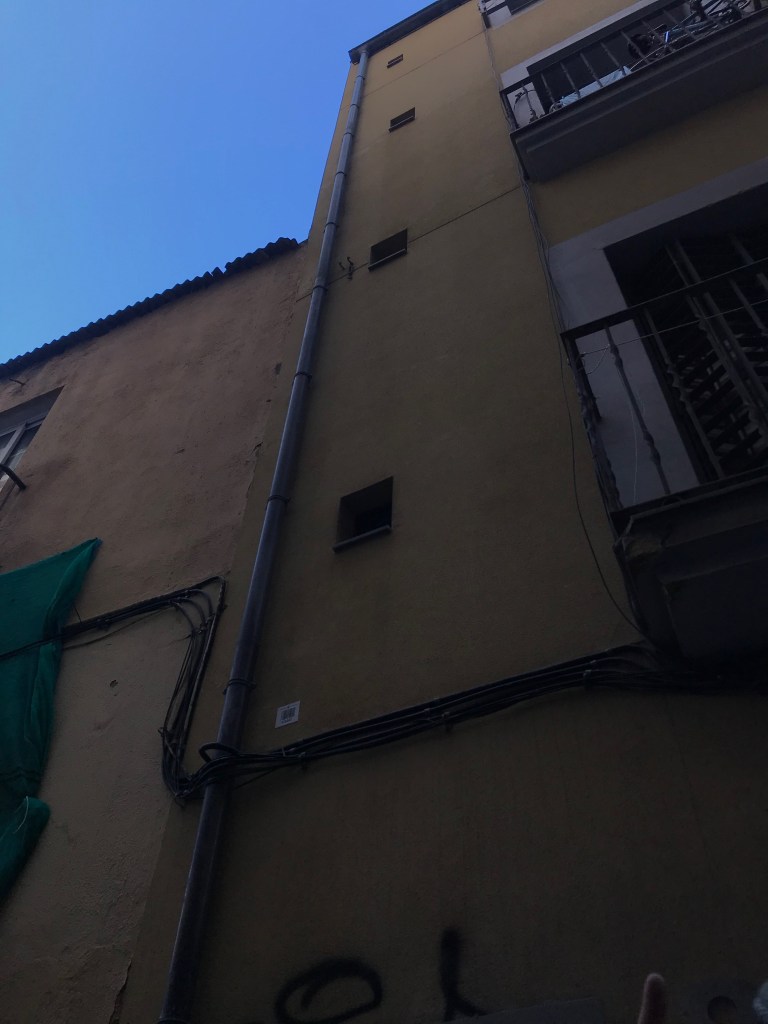
In the stairway to the top, there were little windows to allow light in 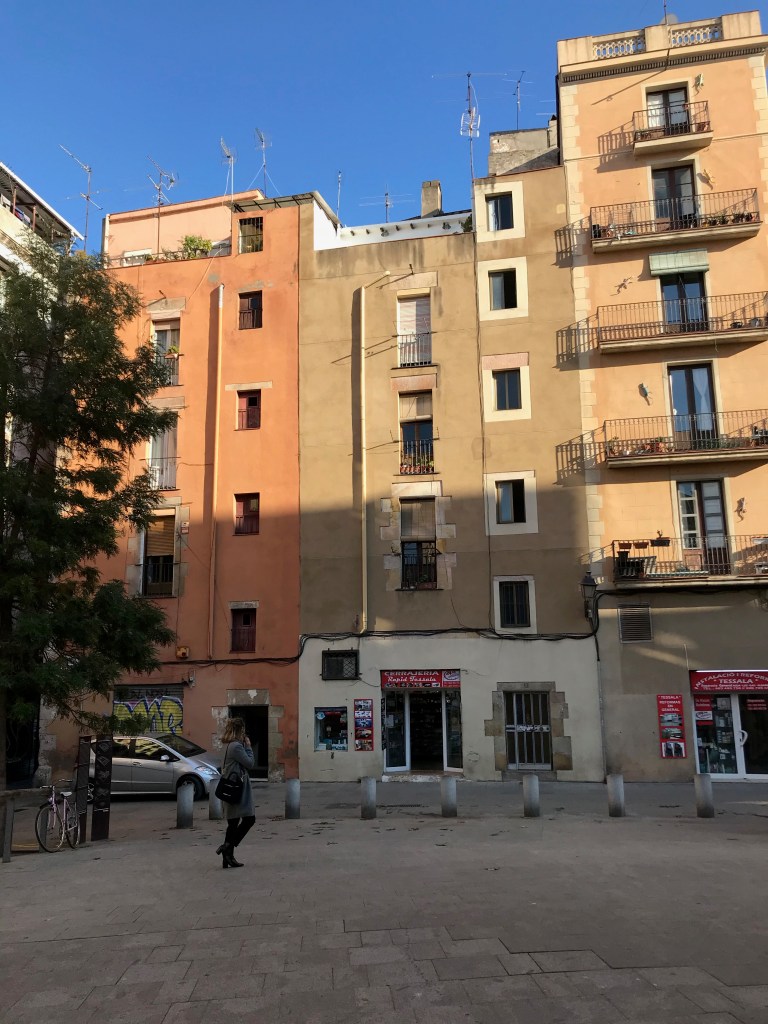
All of the buildings are about the same height with large windows on the ground floor . 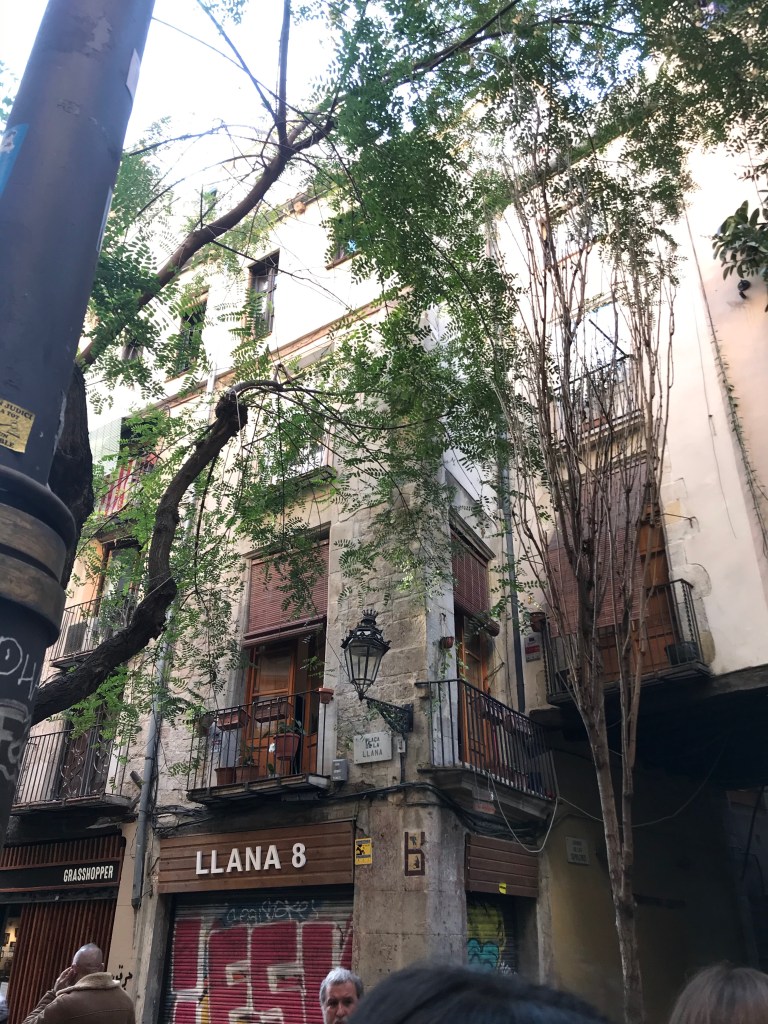
The more wealthy guilds consisted of 2 windows sometimes
These guild buildings are distinguishable craftsman work buildings because of the exterior architecture. The doors are also very narrow and you can find a metal bar on the outside of the windows. Because of this, most of the furniture was made in- house, and the metal bar was to carry up the pieces or any large materials. This differs from the industrial production buildings because those were much larger. The edges of the buildings are also curved for when the chariots turn through the town.
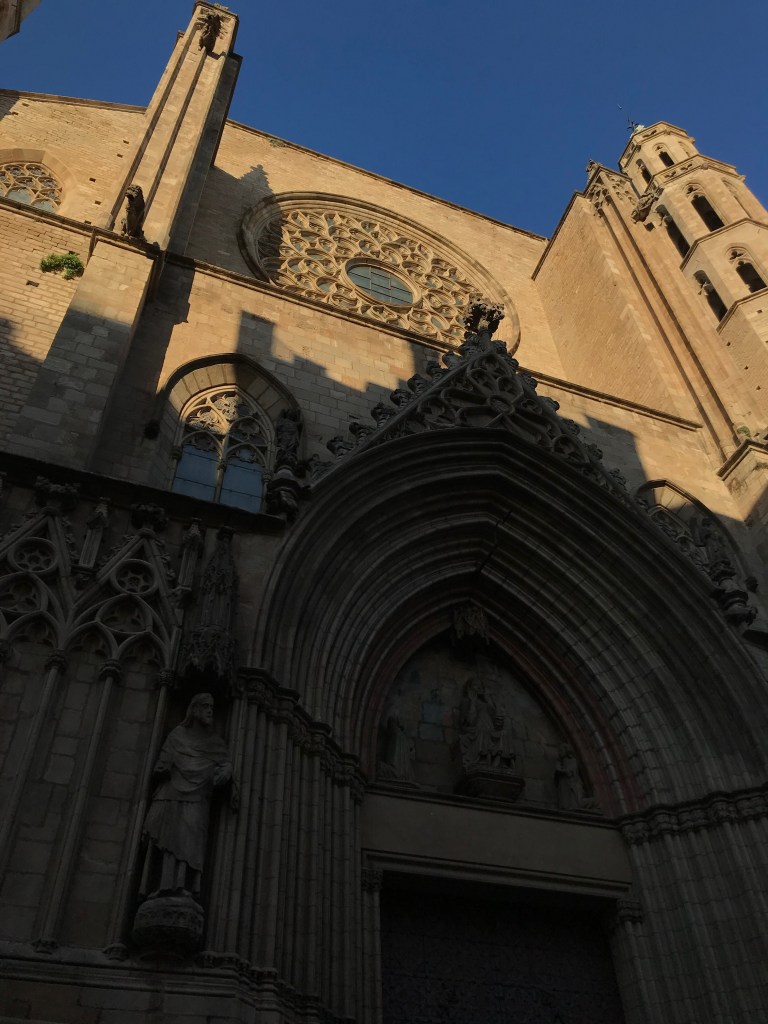
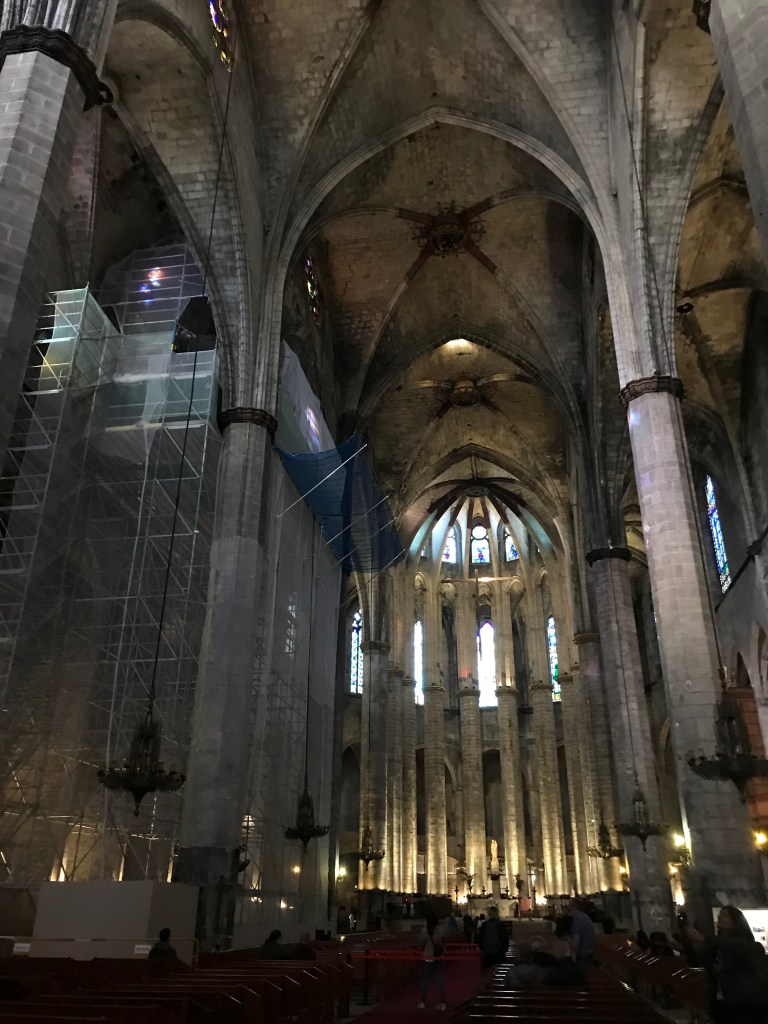
Some other important building in El Born include: Santa Maria del Mar, El Fossà de les Moreres, La ciutadella Park, and El Mercat del Born. Santa Maria del Mar was constructed in the late 1300s with money and work donated by many families in El Born. The church, situated in the neighborhood right near the port, was used by many sailors to pray before leaving on their voyages. There is a boat in the altar that symbolizes this function. Adjacent to Santa Maria del Mar, there is El Fossà de les Moreres. This memorial square is important to Catalans because it is where the Catalans were defeated at the end of the Spanish War of Succession, there is a memorial in the square that has an eternal flame. Today, the day of defeat, September 11th, 1714, is a big celebration in Catalan culture.
After September 11th 1714 the decrees of Nova Planta was proclaimed in Catalonia by Philip V. This was an order by the king for craftsmen to destroy their own guilds as an effort to nationalize Spanish culture, abolish all remnants from the Aragonese crown, and punish the territories that had fought against the king in the war.
Subsequently, the Fortress of Philip V, currently known as La Ciutadella Park, was constructed. This fortress was built to defend against catalan rebellions after 1714. The building of this fortress caused many Catalans to be homeless, as it knocked down a neighborhood to build. The king also forced those who rebelled to work on it.
Today you can see the neighborhood of El Born as living history. The new shops and cafes are situated in the old guild buildings, the fortress has been turned into a park, and all of these aspects can be seen with Catalan flags hanging from balconies.
 socialccs.family.blog