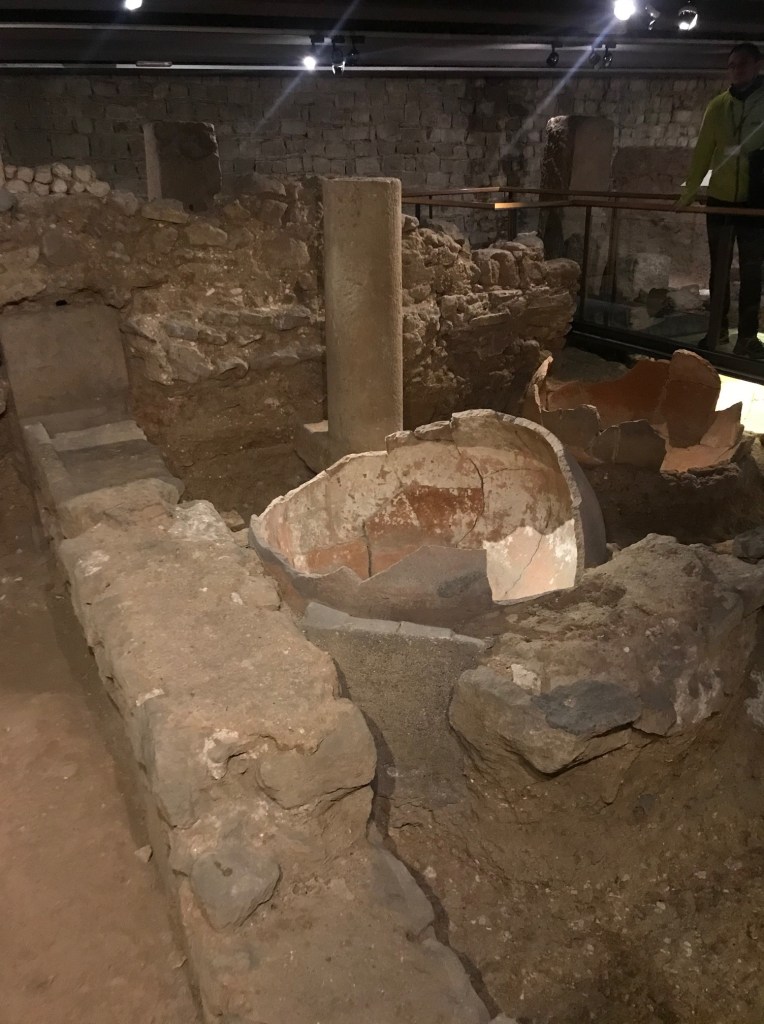
In Barcelona today you can still see the influence of the Romans; it is present in the arches, the walls, and the streets. In a class field trip to The Museu d’Història de la Ciutat, I was able to see a portion of the preserved Roman city of Barcino including its laundromat, sewage system and winery. We also learned about important artifacts of Roman culture such as the layout of the Domus, the significance of wine and religion.
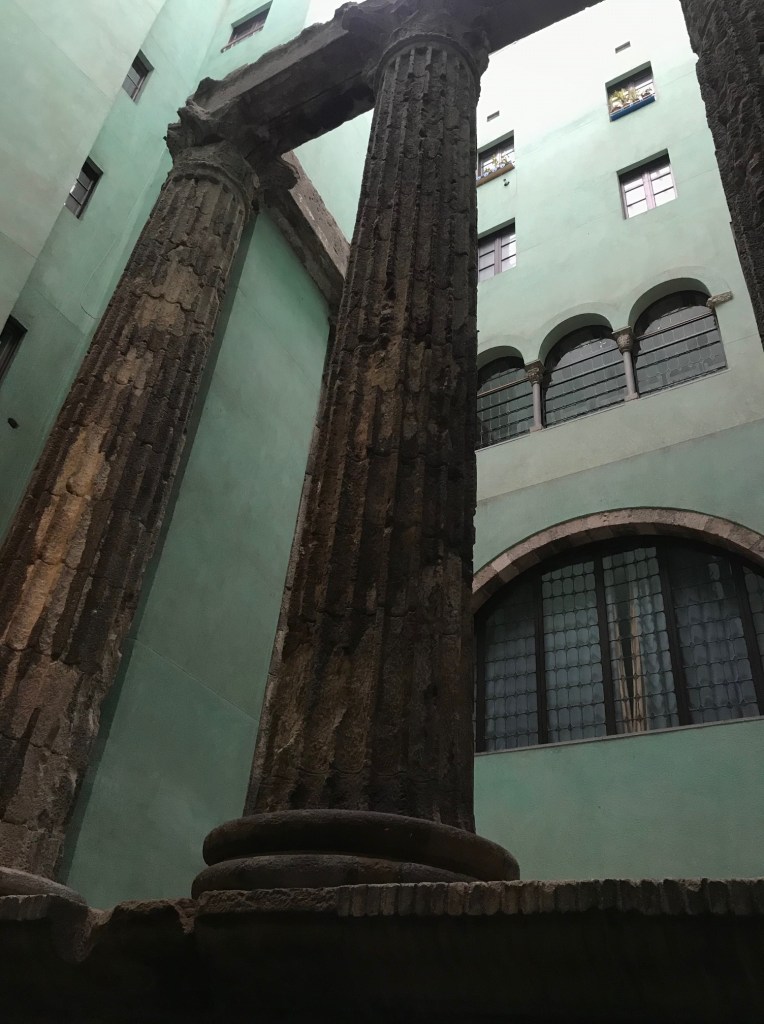
Roman columns from temple in Barcino 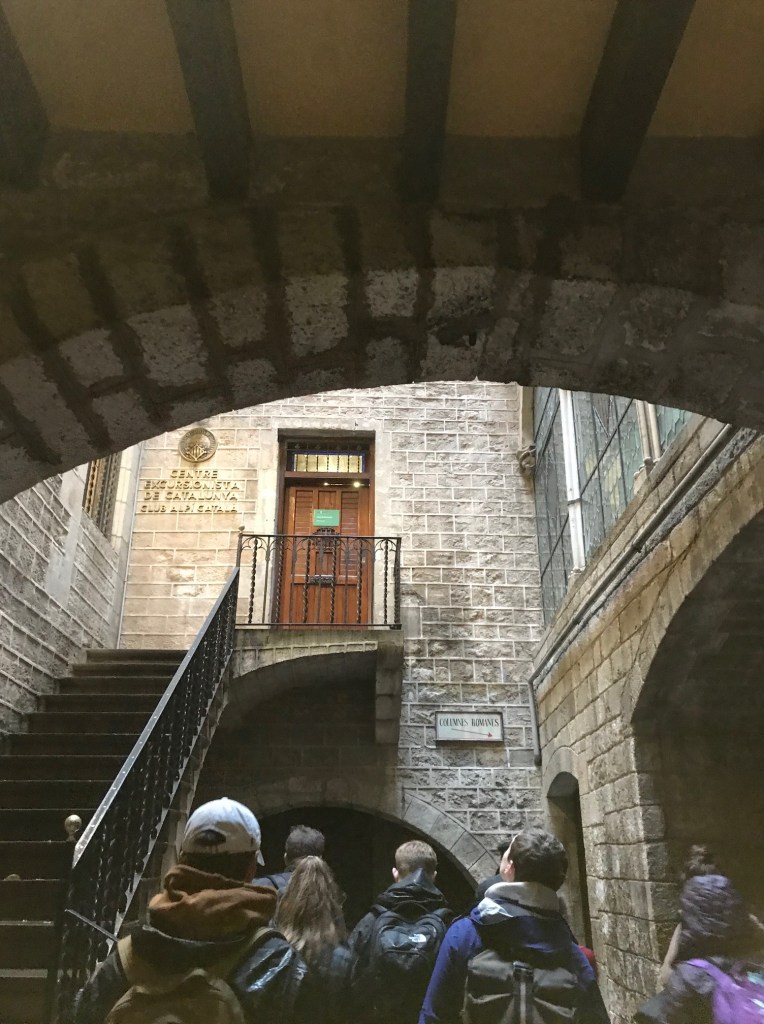
Arch inspired by Roman architecture
We saw a replica of a Domus, or a traditional Roman house, to get a better idea of how wealthy Romans lived inside the city walls. The kitchen, or culina, would normally be very small and windowless as opposed to the dining room, or the triclinium, which was often decorated very extravagantly to display wealth to guests and was furnished with couches. The Peristylum is the front porch of the exterior of the house and the atrium is the front courtyard of the house and would often be very extravagant to impress guests. The atrium often contained a tank to drink water, which was a sign of personal wealth because personal water was not common. We can find similarities in today’s american architecture with large foyers/ entrances to homes. This technique that the Romans used is still used to make statements today. Furthermore, the tablinum was a room off the atrium that was used to hold the families records, normally on tablets. The tablinum was also used for entertainment such as: public readings, discussions, and lectures. Which can be similar to a library or reading room in a house today. And finally, domus’ also consisted of cubiculums, which was a room of the house used for sleeping, or meetings and often more private.
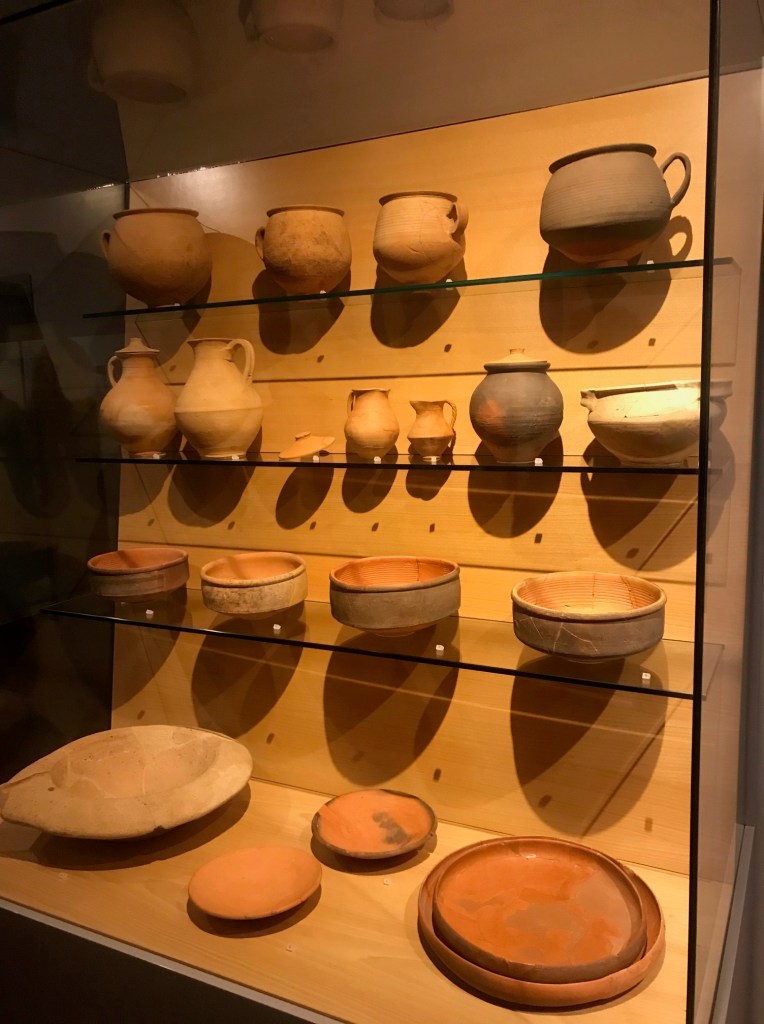
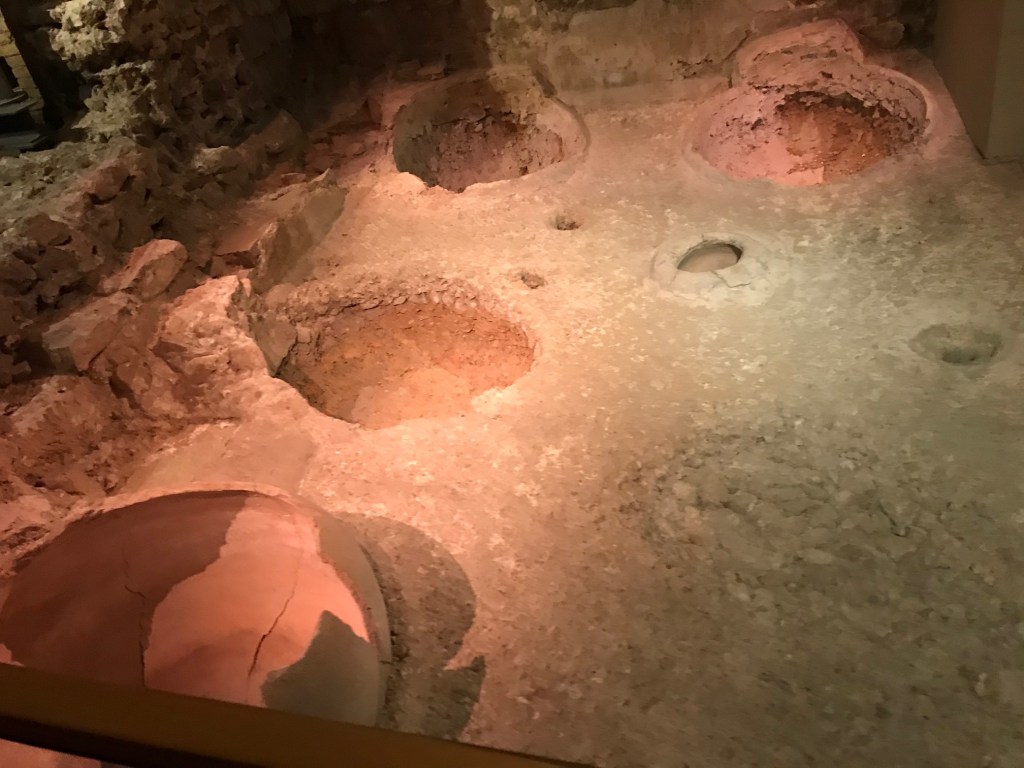
Wine was a very strong cultural thing for the Romans because to drink wine was to be closer to, or one with, the gods especially dionysos, the god of wine. As culture and religion began to shift, over time wine became “the blood of Jesus” still holding a religious significance. Barcino was known as being the place for cheap wine in the Roman empire, thus they would export it all across the empire and became quick producers of wine. They had a winery in Barcino where they used clay barrels for the fermentation process, but would only wait 28 days. This created a very sweet wine. Wine from Barcelona is still popular today and has ties to its religious meaning for example, Dionysus Brut Organic Natural Reserve.
Looking at the artifacts in this museum, you can see the change from polytheism to monotheism in religious art. Roman religious artifacts worship several gods, such as the god of wine, Dionysus. The change in art from portraying several gods, to just one also signified the change in cultures. The romans were polytheistic, and persecuted monotheistic chistians. But after the fall of the Roman empire and rise in christianity, artwork portraying one god became more common.
 socialccs.family.blog